
Buckled Floor Repair in BaltimoreBuckled boards are a symptom — moisture is the problem
When hardwood lifts clear off the subfloor, the wood has taken on water and expanded until something had to give. The boards can usually be dealt with. The moisture that moved them has to be dealt with first.
What makes a floor buckle
Moisture, in nearly every case. Wood expands as it absorbs water, and boards nailed tight against their neighbors have nowhere to go but up — so a run of flooring tents at a seam or peels away from the subfloor entirely. The water gets in three main ways: outright flooding or a major leak, the fast and obvious version; a slow leak — a supply line, a radiator valve, an appliance — feeding the same spot for weeks; or humidity rising from below, which is the quiet Baltimore classic. A damp basement or crawl space under a rowhome keeps the underside of the floor wetter than the top, the boards take on moisture season after season, and one humid summer the floor finally lifts.
Occasionally the cause is installation rather than water: a floor laid with no expansion gap at the walls has no room to swell in any humid spell, so even normal seasonal moisture can push it up. Milder versions of the same forces produce cupping and warping — buckling is the far end of that spectrum.
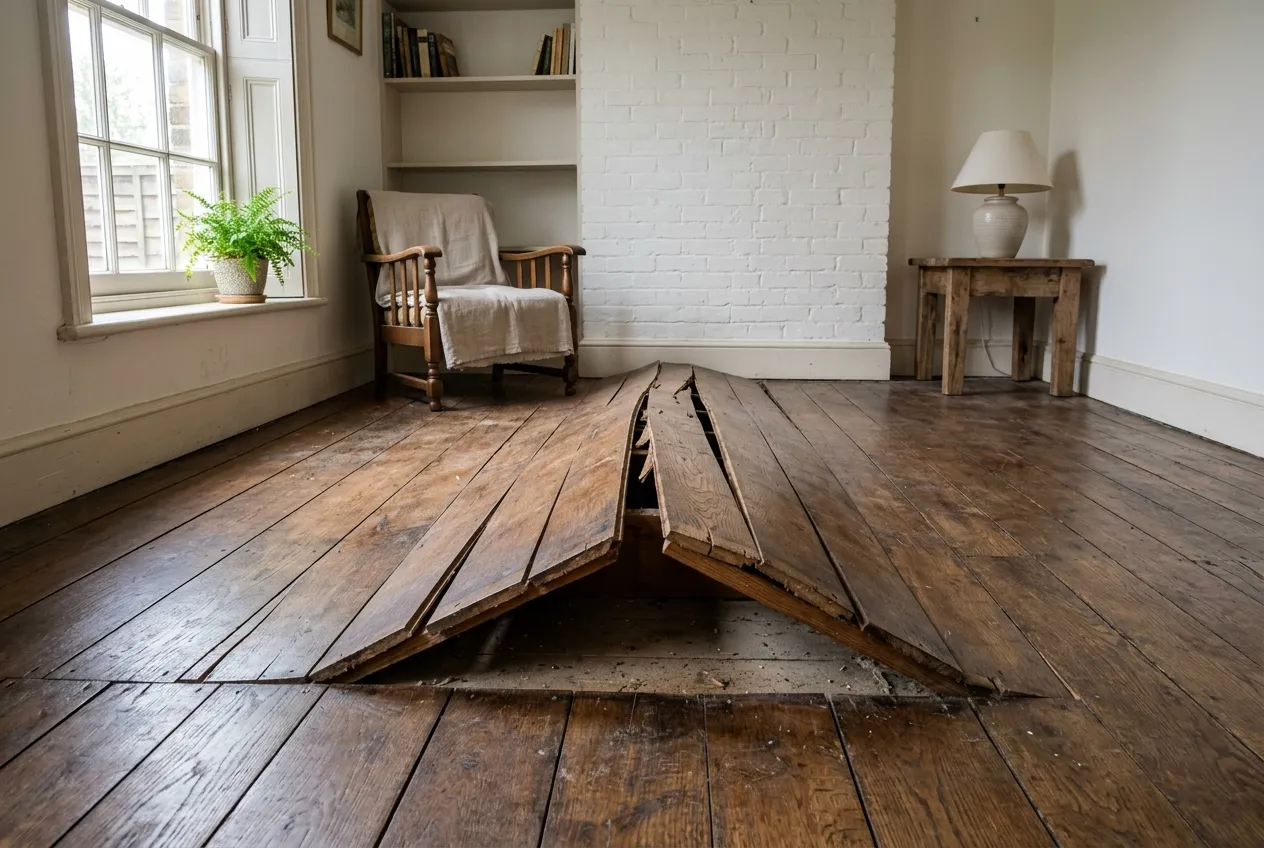
The rule that can’t be skipped: stop the moisture first
No repair to a buckled floor survives an unfixed moisture source. Replace the boards while the leak still runs or the crawl space still breathes damp air onto the subfloor, and the new wood does exactly what the old wood did. So the sequence is fixed: find where the water is coming from, stop it, and dry the floor thoroughly — fans and dehumidification over days or weeks, because wood releases moisture far more slowly than it looks like it should. Only a dry, stable floor can be honestly assessed, and boards often look dramatically better after drying than they did at their wet worst.
What can be saved, and what gets replaced
Minor lifting sometimes resolves on its own as the wood dries and relaxes back toward the subfloor; boards that settle close but not tight can be refastened. Anything beyond that — boards that stay tented, have cracked, or have pulled their fasteners through — gets cut out and replaced, with new boards laced into the surrounding floor so the repair doesn’t read as a patch. The subfloor underneath the buckled run gets checked while the floor is open, because water that lifted the hardwood usually reached the layer below it too — that side of the job is covered under subfloor repair. Where replacement boards meet an aged finish, sanding and refinishing the room blends old and new into one surface.
How long it takes
The repair itself is usually quick — a day or two for a typical buckled section, longer if subfloor work rides along. Drying is what sets the calendar: days at minimum after a contained leak, considerably longer after flooding, and no responsible assessment happens before it’s done. What the work involves and what drives the price is on the repair cost page.
Common questions
Can buckled hardwood floors be repaired?
Often, yes — but only after the moisture source is found and fixed and the floor has fully dried. Minor lifting can settle back as the wood dries and be refastened; badly buckled boards are cut out and replaced with new boards laced into the existing floor. Repairing before the moisture problem is solved just sets up the new wood to buckle the same way.
Why is my old hardwood floor buckling?
Almost always because moisture is reaching it — a leak, a flooding event, or humidity rising from a damp basement or crawl space, which is common under older Baltimore homes. The wood absorbs that moisture, expands, and lifts because tightly nailed boards have nowhere else to go. Finding where the water is coming from matters more than the boards themselves, because any repair fails if the source stays.
Boards lifting right now?
Photos of the buckled area — plus a note on what’s underneath the room — are enough for a first read on where the moisture is likely coming from and what the fix looks like.
Floor tenting up at a seam?
Call — finding the moisture source early is what keeps a small repair small.