
Warped Floor Repair in BaltimoreWarped boards? Diagnose the moisture before anyone touches a sander
A hardwood floor warps for one reason: the top and bottom of the boards are holding different amounts of moisture. Fix that imbalance first and the floor often meets you halfway. Sand first and you can build the problem in permanently.
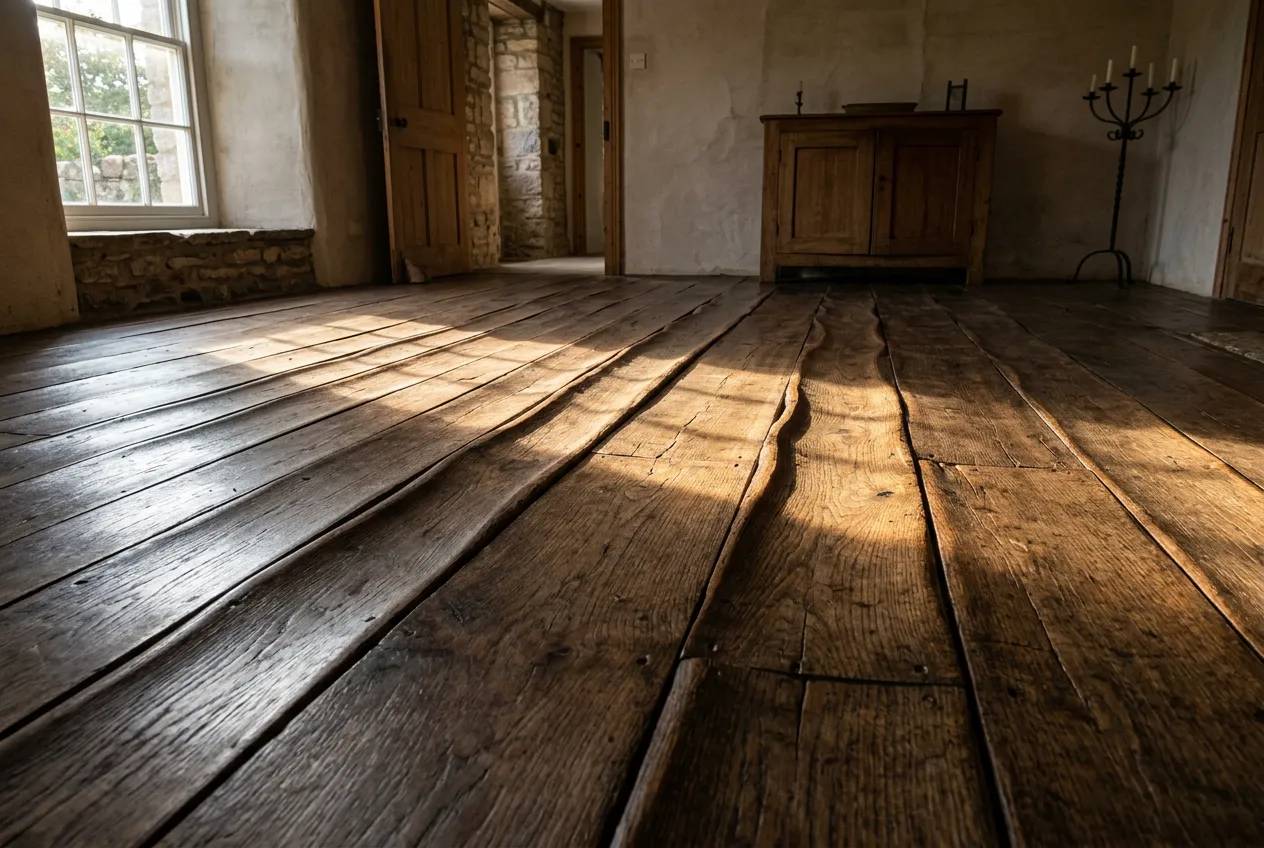
Cupping vs. crowning — read the shape of the board
Cupping is when the edges of each board sit higher than the center — run your hand across the floor and it feels like a washboard. It means the boards are wetter underneath than on top, so the undersides swell and push the edges up. In Baltimore rowhomes the usual suspects are a damp basement or crawl space under the floor, humid Chesapeake summers with no dehumidifier running, or a slow leak nearby — if there was an actual water event, start with the water damage page instead.
Crowning is the opposite: the center of each board sits higher than the edges. It sometimes comes from moisture on top of the floor, but the classic cause is a repair gone wrong — a cupped floor that was sanded flat before it finished drying. The sander takes the high edges down; then the boards dry out, the edges shrink back, and the untouched centers are left standing proud. That is why the order of operations below matters more than the sanding itself.
Fix the moisture balance first — always
Warping is a symptom. Until the source is handled — the leak stopped, the basement or crawl space dried and kept dry, indoor humidity brought under control — any cosmetic fix is temporary at best and harmful at worst. A proper assessment takes moisture readings from the top of the boards and from underneath, because the difference between those two numbers is the whole story. A floor sanded flat while it is still cupped will crown later, and at that point you have spent wood thickness making the floor worse.
Can it be saved? Usually — here’s the honest breakdown
Mild cupping often flattens on its own. Once the moisture above and below the floor equalizes, wood that was pushed out of shape relaxes back. Give it a full season of stable conditions before deciding anything cosmetic is needed at all.
Stable, residual warp can be sanded flat. If the moisture problem is fixed and the boards have settled but a permanent set remains, a sand and refinish takes the floor back to flat, level wood. The key word is stable — confirmed by readings, not by eye.
Severe distortion means board replacement. Boards that have twisted badly, split, or pulled their fasteners loose will not come back, and boards that have lifted off the subfloor entirely are a different problem — see buckling. The fix there is a board-level repair: the damaged boards come out, new wood is laced into the old floor, and the area is blended in.
What the timeline looks like
The slow part is the drying, not the work. Getting a damp floor and its subfloor back to equilibrium takes weeks, sometimes a full humid-to-dry season, and rushing it is how crowning happens. Once readings are stable, the work itself moves quickly — a sand and refinish is measured in days, and a localized board replacement with blending is similar. The right first step is an assessment with a moisture meter, not a quote for sanding.
Not sure if it’s cupping or crowning?
Send a photo taken low across the floor toward a window — the raking light shows the shape clearly. You’ll get a straight answer on whether to wait, sand, or replace.
Floor gone wavy underfoot?
Call for a moisture-first assessment — no sander comes out until the readings say so.